
Paris in 4 Days: The Perfect Itinerary
and Travel Tips
Plan four days in Paris with an itinerary covering the Eiffel Tower, Louvre, Montmartre and Notre-Dame, plus practical transport and travel tips.
Paris in 4 Days: The Perfect Itinerary for Exploring the French Capital
Paris is a city best experienced at a comfortable pace. Its famous landmarks may draw you in, but its character emerges through the details: a quiet walk beside the Seine, an afternoon spent exploring an old neighbourhood, a visit to a remarkable museum, or a leisurely meal at a traditional French bistro.
With four days in the French capital, you can experience many of its defining sights without turning your holiday into a race against the clock. The key is to group attractions by location, reserve time for the places that interest you most, and leave a little room for spontaneous discoveries.
Whether this is your first visit or a return to a city you already love, this four-day Paris itinerary combines architecture, art, history, neighbourhood walks and practical advice to help you plan a rewarding city break.
Day 1: The Eiffel Tower and the Seine
Start at the Eiffel Tower
Begin your Paris adventure at the city's most recognisable landmark: the Eiffel Tower. Built for the 1889 Exposition Universelle, the tower has become an enduring symbol of Paris and offers panoramic views from its observation levels.
Before visiting, walk towards the Trocadéro area for a different perspective of the tower. It is a popular place for photographs, particularly in the morning, when the surrounding area may be quieter.
If you want to go up the tower, book your tickets in advance and check the official website for availability on your chosen date. Access to the upper levels depends on your ticket type, operating conditions and availability.
Walk through Champ de Mars and visit Les Invalides
After your Eiffel Tower visit, take a stroll through Champ de Mars, the green space stretching alongside the monument. From here, you can continue towards Les Invalides, a historic complex that houses the Army Museum and Napoleon Bonaparte's monumental tomb.
This part of the day is easy to adapt to your interests. History enthusiasts may want to spend longer inside the museum, while those who prefer a relaxed itinerary can focus on the surrounding architecture and gardens.
Explore the Seine on foot
In the afternoon, head towards the Seine. Its riverbanks connect many of central Paris's most important landmarks, making them ideal for a scenic walk. Along the way, you will pass historic bridges, elegant buildings and views that change with every turn.
For a different perspective, consider a sightseeing cruise. Check the departure point, duration and route before booking, as these vary by operator.
Finish the day with dinner near the river or in one of the surrounding neighbourhoods. There is no need to fill every hour with an activity; some of Paris's best moments happen when you slow down.
Day 2: Art, History and Grand Parisian Boulevards
Discover the Louvre Museum
Dedicate the second day to art and history, beginning with the Louvre, one of the world's best-known museums. Its collections span numerous civilisations and historical periods, while the building itself reflects a long history as a royal residence and cultural institution.
Among its most famous works are the Mona Lisa, the Venus de Milo and the Winged Victory of Samothrace.
The Louvre is enormous, so arriving without a plan can make the visit overwhelming. Choose a few collections or artworks you particularly want to see and allow several hours to explore them. Booking a timed ticket is recommended. Always check the official website for opening hours and closure days before your visit.
Stroll through the Tuileries Garden
After the museum, step into the Tuileries Garden, the historic garden connecting the Louvre with Place de la Concorde.
It is an excellent place to take a break, walk among the trees and sculptures, or enjoy a coffee before continuing your afternoon.
From here, walk to Place de la Concorde, one of Paris's largest squares. The view opens towards the Champs-Élysées and the Arc de Triomphe, creating one of the city's most recognisable monumental perspectives.
Walk along the Champs-Élysées
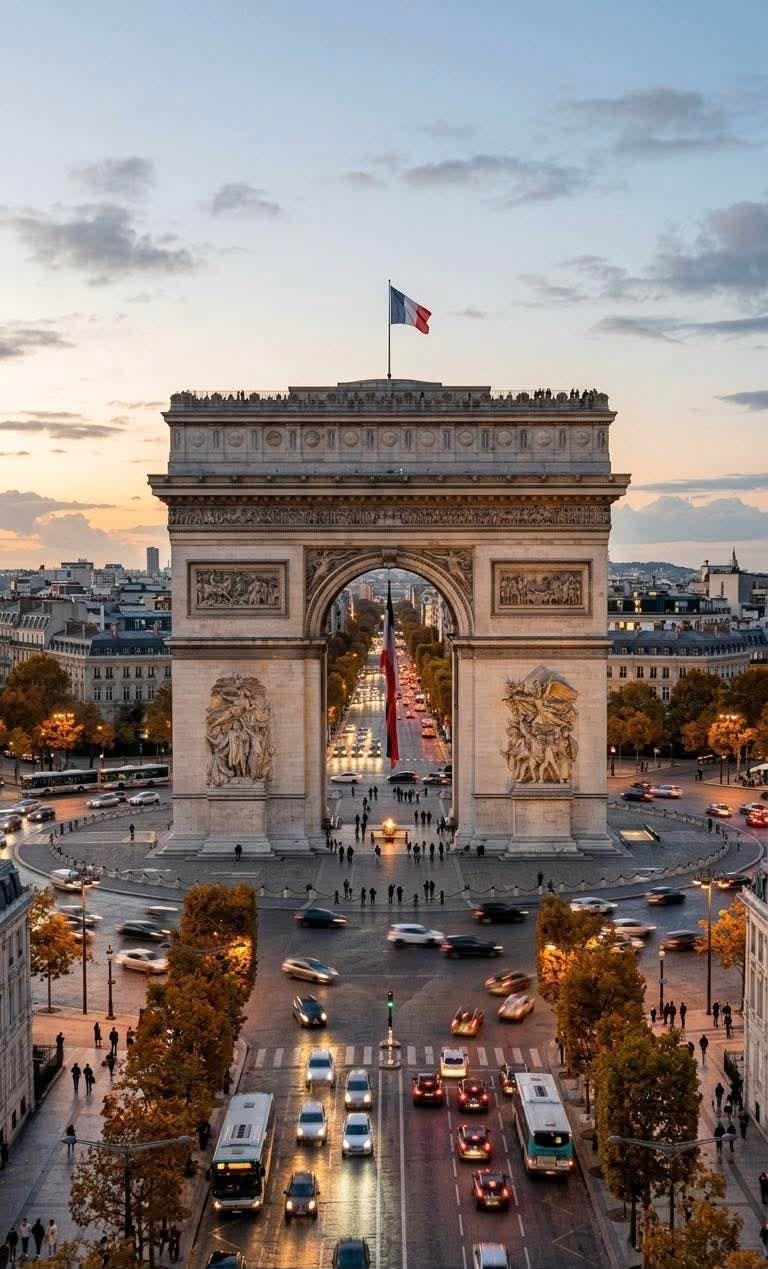
Continue along the Champs-Élysées, the famous avenue lined with shops, restaurants and elegant buildings. It leads towards the Arc de Triomphe, which stands at the centre of Place Charles de Gaulle.
If you would like another panoramic view of Paris, consider visiting the monument's rooftop terrace. From above, the city's broad avenues radiate outwards in a distinctive urban pattern.
Keep the afternoon flexible. If you prefer spending more time at the Louvre, there is no need to rush through the rest of the itinerary simply to tick off every landmark.
Day 3: Montmartre and the Neighbourhoods of Paris
Explore Montmartre and Sacré-Cœur
On your third day, step away from the grand boulevards and explore Montmartre, a historic neighbourhood in northern Paris known for its artistic heritage and village-like streets.
Montmartre has long been associated with painters, writers and the city's creative life. Its cobbled lanes, stairways, small squares and older buildings make it particularly rewarding to explore on foot.
The main landmark is the Basilica of Sacré-Cœur, which sits on the hill overlooking Paris. Beyond its architecture, the site is known for its expansive views across the city.
Allow yourself time to wander without following a strict route. You may come across small cafés, art galleries and quieter streets away from the busiest visitor areas.
Visit Place du Tertre
Continue to Place du Tertre, where artists display their work and offer portraits. The square preserves part of Montmartre's artistic tradition, although it is also one of the neighbourhood's most popular visitor spots.
If you are interested in local history and art, consider adding the Musée de Montmartre to your itinerary. Check its current opening hours and exhibitions before visiting.
Discover Le Marais
In the afternoon, make your way to Le Marais, a historic district known for its architecture, independent shops, galleries and restaurants.
Wander through its streets and stop at Place des Vosges, a historic square surrounded by distinctive buildings. If you would like to explore another museum, the Musée Carnavalet offers exhibitions dedicated to the history of Paris.
Le Marais is ideal for a less structured afternoon. Instead of moving from one major attraction to another, you can enjoy the neighbourhood's shops, cafés and architectural details at your own pace.
For dinner, choose a local bistro or restaurant and try a few traditional French dishes. Experiencing the everyday rhythm of a city can be just as rewarding as visiting its most famous sights.
Day 4: Notre-Dame, Historic Paris and Your Final Afternoon
Visit Notre-Dame Cathedral
Begin your final day on Île de la Cité, the historic island in the Seine where Notre-Dame Cathedral stands.
One of the most significant examples of French Gothic architecture, Notre-Dame has played an important role in the city's religious and cultural history. Following the fire in April 2019, the cathedral underwent extensive restoration and reopened to visitors in December 2024.
Before your visit, consult the official website for current access arrangements, opening hours and any special visitor requirements.
Afterwards, take a walk along the surrounding riverbanks and explore the historic centre. This part of Paris is particularly enjoyable on foot, allowing you to appreciate the relationship between the city's architecture, river and streets.
Explore Sainte-Chapelle and the Latin Quarter
Close to Notre-Dame, Sainte-Chapelle is known for its remarkable stained-glass windows. If medieval architecture interests you, check ticket availability and consider including it in your morning plans.
Continue towards the Latin Quarter, a historic district associated with universities, bookshops, cafés and Paris's intellectual life. You can explore its streets before stopping at the Luxembourg Gardens, one of the city's best-known green spaces.
This is a good part of the day to leave unhurried. Browse a bookshop, sit in the gardens or enjoy a relaxed lunch before deciding how to spend your final afternoon.
How should you spend your last afternoon?
Your choice depends on your interests and departure time.
- For art and culture: Visit another museum or gallery that you have not included earlier in the trip.
- For shopping: Explore the Opéra district and the department stores along Boulevard Haussmann.
- For a relaxed afternoon: Return to the Seine or enjoy a coffee in a neighbourhood you particularly liked.
- For a day trip: Consider the Palace of Versailles, outside Paris, if you are willing to dedicate most of the day to the visit.
Versailles requires additional travel time and a substantial amount of time to explore properly. If you choose this option, treat it as an alternative to the central Paris itinerary rather than trying to squeeze it into a few spare hours.
Practical Tips for a Four-Day Paris Trip
When is the best time to visit Paris?
Paris is a year-round destination, and each season offers a different experience.
Spring and autumn are often appealing for walking and sightseeing, although the weather can change quickly. Summer brings longer days and more opportunities to enjoy outdoor spaces, but major attractions can be busy. Winter offers a different atmosphere, with shorter days and more opportunities to explore museums, galleries and cafés.
Whatever time of year you visit, check the forecast before travelling and keep a few indoor alternatives in mind in case of rain.
How do you get around Paris?
Paris has an extensive public transport network, including the metro, regional RER trains, buses and trams. For a four-day city break, combining public transport with walking is a practical way to explore.
Before purchasing tickets, check the latest fares, coverage and travel conditions on the official Île-de-France Mobilités website. If you are arriving at a Paris airport, check the appropriate airport transfer ticket separately, as different fares may apply.
Walking is particularly rewarding in areas such as Montmartre, Le Marais and the historic centre, where exploring the streets is part of the experience.
Where should you stay?
For a short visit, choose accommodation near a metro station with convenient connections to the places you plan to visit.
Central neighbourhoods can make sightseeing on foot easier, while areas farther out may offer alternatives at different price points. Do not judge accommodation by map distance alone: check public transport connections, realistic journey times and booking conditions.
What should you book in advance?
Advance planning can save time at popular attractions, especially when timed entry is required or recommended.
Consider checking tickets and availability for:
- The Eiffel Tower.
- The Louvre Museum.
- The Arc de Triomphe.
- Sainte-Chapelle and any other museums on your itinerary.
- Airport transfers and transport to Versailles, if applicable.
Opening hours, ticket prices and entry conditions can change. Use official websites to confirm the latest information before finalising your plans.
How Much Does a Four-Day Trip to Paris Cost?
The total cost depends on the season, accommodation, transport, meals and the number of paid attractions you visit.
To build a realistic budget, divide your expected expenses into a few main categories:
- Accommodation: Your hotel or apartment for the duration of your stay.
- Transport: Airport transfers and journeys around the city.
- Attractions: Museum admissions, monuments and booked activities.
- Food: Breakfast, lunch, dinner and coffee stops.
- Personal spending: Shopping, souvenirs and optional experiences.
Rather than planning every expense down to the last detail, leave some flexibility for a spontaneous activity or a change of plans.
A comfortable itinerary does not have to be the most expensive one. Prioritise the experiences that matter most to you and build the rest of your trip around them.
Paris in Four Days: Make the City Your Own
Four days in Paris are enough to experience many of the city's defining features: its landmarks, remarkable art collections, historic neighbourhoods and lively riverbanks.
Yet a memorable trip is not measured by how many places you manage to visit. It might be a quiet walk through Montmartre, a discovery in a small bookshop, or an unhurried evening at a neighbourhood bistro.
Explore the festive destinations and travel experiences offered by NORIVA Travel, and find inspiration for your next journey.
Sometimes, the most memorable destinations are the ones you simply allow yourself to experience.